Nationwide Shipyard Network
Find the right shipyard for your project across Indonesia. Our comprehensive directory covers shipyards in Bali, South Sulawesi, Batam, Labuan Bajo, and Jakarta/Surabaya — each with specific capabilities for different vessel types and materials.
Consider: vessel type and material, proximity to your intended cruising area, classification requirements, refit capabilities, and cost. Our team helps match your project to the optimal facility.
Indonesia’s shipbuilding industry spans thousands of islands across the archipelago, from large industrial yards in Java to traditional boat-building villages in Sulawesi and Kalimantan. The country ranks among the world’s top 20 shipbuilding nations by gross tonnage, with over 250 registered shipyards producing vessels for domestic and international markets. Indonesia’s competitive advantages include abundant tropical hardwood resources, competitive labor costs, a long maritime tradition dating back centuries, and strategic location along major international shipping routes connecting the Indian and Pacific Oceans.
Shipyards across Indonesia provide comprehensive vessel construction services including custom new builds, vessel refitting and restoration, marine survey and inspection, naval architecture consultation, and complete project management from design concept through sea trials. Many facilities maintain active certifications from international classification societies and employ formally trained marine engineers alongside traditional craftsmen.
Indonesian shipyards work with diverse marine-grade materials including Indonesian teak and ironwood for traditional wooden construction, marine-grade steel and aluminum for commercial and industrial vessels, fiberglass and composite materials for modern recreational craft, and hybrid combinations that leverage the strengths of multiple materials. All construction through BCI follows documented quality management procedures with regular third-party inspection at critical milestones.
Boat Construction Indonesia serves as your dedicated project management partner, connecting international clients with the finest shipyard facilities across Indonesia. Our services include initial feasibility assessment and yard selection, detailed specification development, contract negotiation and management, material procurement oversight, construction quality monitoring with photographic progress reports, classification society coordination, sea trial supervision, and vessel delivery logistics. We bring transparency and accountability to every project.
Indonesia has over 250 registered shipyards ranging from large industrial facilities capable of building vessels over 100 meters to small traditional boatyards producing wooden fishing boats and coastal craft. Major shipbuilding clusters are located in Batam, Jakarta, Surabaya, Semarang, Makassar, and along the South Sulawesi coast. The industry employs approximately 150,000 workers directly and supports hundreds of thousands more in related supply chain industries.
The primary classification society in Indonesia is BKI (Biro Klasifikasi Indonesia), the national classification body. International societies with offices in Indonesia include Lloyd’s Register, DNV GL, Bureau Veritas, American Bureau of Shipping (ABS), and ClassNK. Most Indonesian-built vessels for domestic operation require BKI classification, while export vessels or those operating internationally typically carry dual classification from BKI and an IACS member society.
BCI employs experienced marine surveyors and project managers who conduct systematic inspections at every critical construction milestone. Our 200+ point quality checklist covers hull integrity, structural welding, mechanical installation, electrical systems, plumbing, interior finishing, deck hardware, safety equipment, and paint systems. All vessels receive independent third-party survey prior to delivery, and clients receive comprehensive documentation packages including material certificates, test reports, and construction photographs.
Yes — we arrange multi-shipyard tours for clients evaluating options. Typical tour: Bali (2 days) → Sulawesi (2 days) → return.
Whether you are planning a traditional wooden phinisi, a modern composite yacht, or a commercial steel vessel, Boat Construction Indonesia has the expertise and shipyard partnerships to bring your vision to reality. Contact our team today for a free initial consultation, detailed cost estimate, and customized project timeline. We look forward to helping you navigate Indonesia’s top-tier shipbuilding industry with confidence.
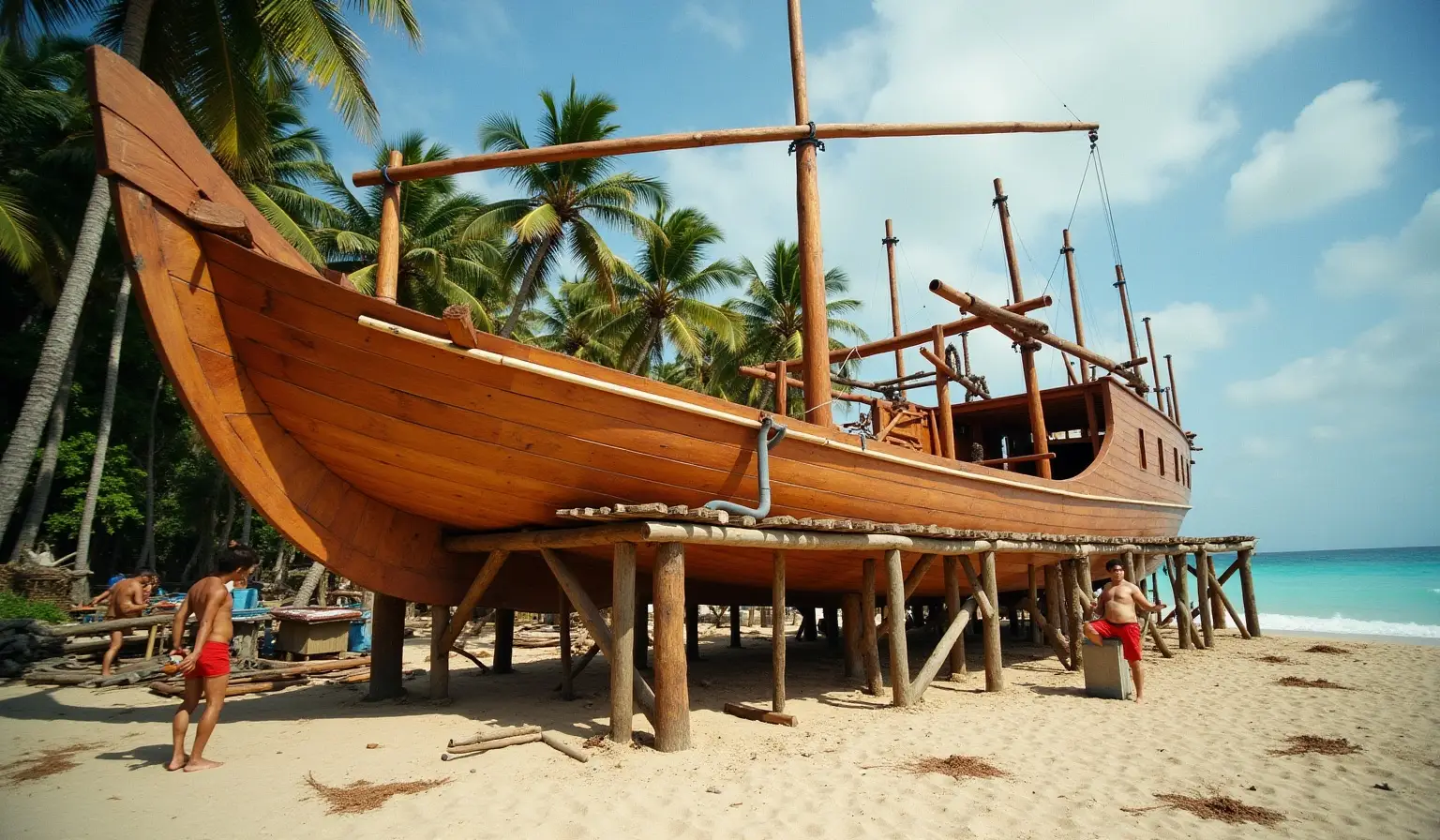
Indonesia’s shipbuilding industry features distinct regional specializations reflecting local traditions, available materials, and market demand. South Sulawesi (Bulukumba, Makassar) leads in traditional wooden phinisi construction. Batam and the Riau Islands dominate steel and aluminum commercial vessel production. Java’s north coast shipyards (Jakarta, Semarang, Surabaya) handle the largest commercial vessels including tankers, bulk carriers, and naval craft. Bali and Labuan Bajo specialize in luxury tourism vessels and custom yachts. Kalimantan’s river shipyards produce inland waterway vessels and timber transport barges.
The Indonesian government actively supports shipbuilding through the “cabotage” policy requiring domestic shipping to use Indonesian-flagged and Indonesian-built vessels, as well as through tax incentives, shipyard development grants, and workforce training programs. The Maritime and Investment Coordinating Ministry has identified shipbuilding as a strategic industry, with goals to increase domestic shipyard capacity and reduce dependence on imported vessels. These policies create strong demand for Indonesian-built vessels across commercial, government, and military sectors, supporting continued investment in shipyard facilities and workforce development throughout the archipelago.
Selecting the right shipyard from Indonesia’s diverse options requires careful consideration of vessel type, construction material, budget, timeline, quality standards, and intended operating area. Boat Construction Indonesia simplifies this complex decision with decades of experience working across all major shipbuilding regions. Our comprehensive shipyard evaluation process assesses facility capabilities, workforce qualifications, quality management systems, safety records, financial stability, and references from previous builds. We match each client’s specific requirements with the ideal shipyard partner, negotiate favorable terms, and provide continuous oversight from contract signing through vessel delivery. Whether you need a traditional wooden phinisi from South Sulawesi, a modern aluminum ferry from Batam, or a luxury composite yacht from Bali, BCI is your trusted guide to Indonesia’s top-tier shipbuilding industry.
Indonesia’s maritime workforce continues to grow through formal vocational training programs, apprenticeship systems in traditional boatbuilding communities, and university-level marine engineering education. Major shipbuilding regions maintain polytechnic institutions offering certificates in welding technology, marine electrical systems, fiberglass composite construction, and naval architecture. The government’s Maritime Vocational Training Centers in Batam, Surabaya, and Makassar produce qualified marine technicians annually, ensuring a sustainable pipeline of skilled workers for the expanding shipbuilding industry.
Talk to Our Team
Free consultation and detailed quotation within 48 hours. Custom builds from our Sulawesi and Bali facilities.
