How much does it cost to build a boat in Indonesia?
A new basic phinisi-class build typically costs $600,000–$1.2M. A 30–40m luxury build runs $1.8M–$3M, and 45m+ superyacht-class builds range $4M–$8M. The final figure depends on length, timber selection, engineering package and interior fit-out.
How long does boat construction in Indonesia take from keel laying to delivery?
Smaller vessels take about 10–14 months, mid-size luxury builds 18–24 months, and superyacht-class projects 24–30+ months from keel laying to handover, including sea trials.
How much does a 25m, 35m and 50m custom build cost in Indonesia?
As honest ranges: a 25m-class new build starts around $600k–$1.2M, a 35m luxury build runs roughly $1.8M–$3M, and a 50m superyacht-class phinisi ranges $4M–$8M depending on specification.
Should I build a new boat or buy a used liveaboard in Indonesia?
A used 20–30m liveaboard typically trades at $350k–$800k and is sailing within months; a new build takes 1–2+ years but gives full control of layout, timber and systems. The right answer depends on budget, timeline and how specific your charter concept is.
How do monsoon seasons affect the boat construction schedule?
The wet season (roughly November–March) slows timber drying and launch windows, so realistic build schedules include weather buffers. Yards plan hull launches around the dry season where possible.
Why is boat construction in Indonesia so much cheaper than in Europe or Australia?
Skilled-labour costs are lower, premium hardwoods like ironwood and teak are sourced locally, and heritage yards in Bulukumba work at village scale with minimal overhead. Comparable builds typically come in 40–60% below European pricing.
Where are boats built in Indonesia — Bulukumba, Bira, Labuan Bajo or Bali?
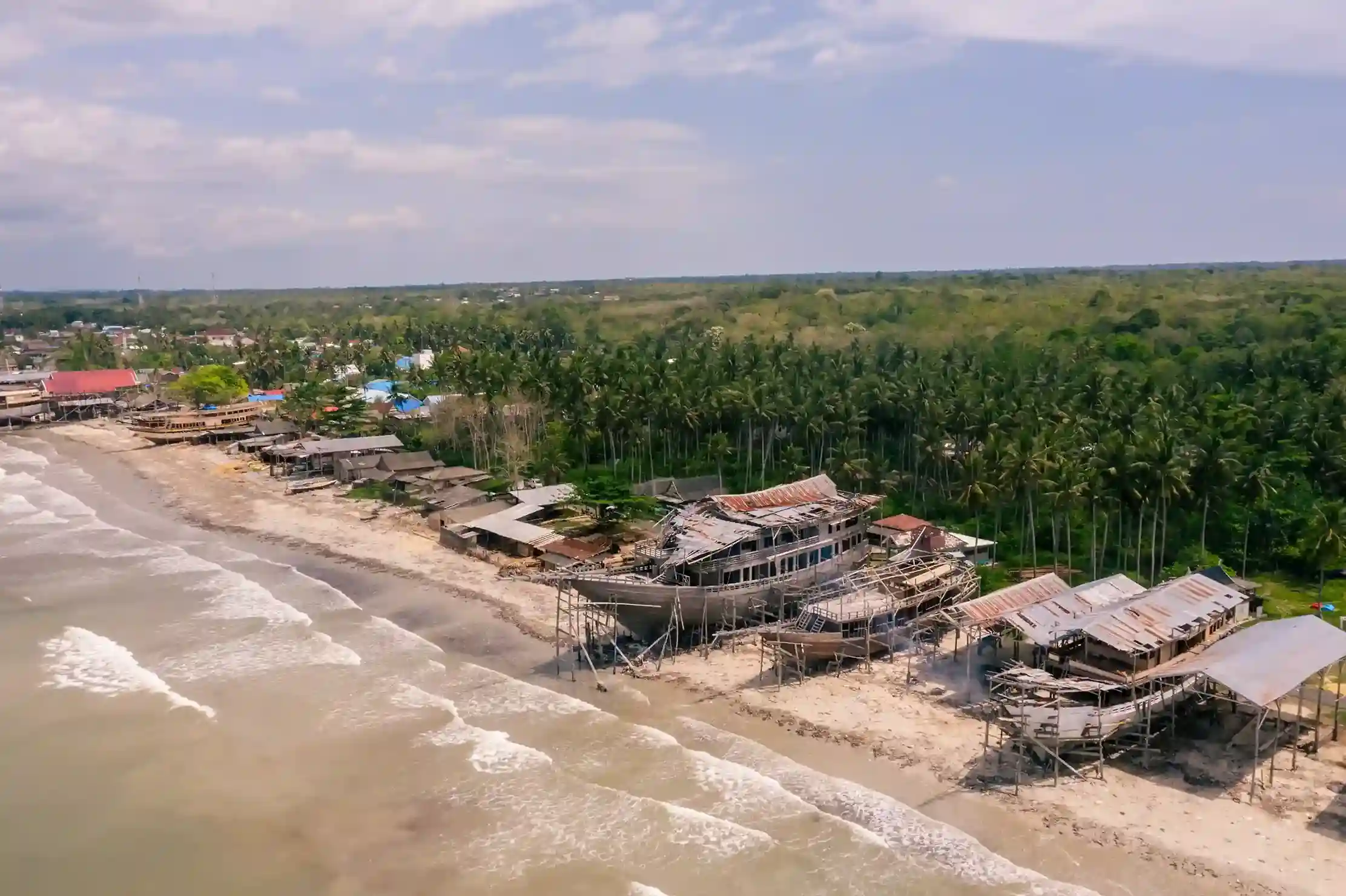
Wooden hulls are traditionally built in Bulukumba (Tana Beru and Bira, South Sulawesi), the UNESCO-recognised home of phinisi building. Finishing and refit work is often done in Labuan Bajo, while design coordination and project management run through Bali.
What wood is used in Indonesian boat building — ironwood (ulin), teak or bengkirai?
Ulin (ironwood) is the preferred hull timber for its density and rot resistance, teak is used for decks and interiors, and bengkirai serves structural members. Timber choice is agreed at the design stage.
Can I build a steel-hull yacht with a wooden superstructure in Indonesia?
Yes. Hybrid builds combining a steel or aluminium hull with a timber superstructure are possible; the classification society and survey plan should be agreed before construction starts.
Can I visit the shipyard during my boat's construction?
Yes, and it is encouraged. Clients visit Tana Beru and Bira during construction, attend the keel-laying ceremony, and receive regular photo and video progress reports between visits.
Can a foreigner legally commission and own a boat built in Indonesia?
Yes. Foreigners can commission a build and own it privately under a foreign flag (for export or international cruising), or operate it commercially in Indonesia through a PT PMA company structure with foreign ownership capped at 49% for domestic charter licensing.
What are the payment stages when building a boat in an Indonesian shipyard?
Payments are staged against milestones — typically a deposit at contract, then instalments at keel laying, hull completion, launch and delivery. Exact percentages are defined in the build contract.
Can my Indonesian-built boat be classified to RINA or Lloyd's standards?
Builds can be surveyed and classified when this is specified from the design phase. Indonesian BKI classification is standard; international class such as RINA or Lloyd's can be arranged for projects that require it.
What warranty do Indonesian boat builders offer on a new build?
Builders provide a defects and structural warranty period defined in the build contract, typically covering hull integrity and workmanship. Confirm the exact scope and duration before signing.
What design and naval-architecture support is included before construction starts?
Before keel laying you receive naval-architecture drawings, general arrangement and layout plans, engineering and systems specifications, and a build timeline — so the yard, surveyor and owner all work from the same documents.
What is included in a turnkey new-build — engines, navigation, interior fit-out?
A turnkey contract covers the complete vessel: engines and drivetrain, electrical systems, navigation electronics, safety equipment, tenders and full interior fit-out to your specification. Scope is itemised in the contract.
How do I get my new boat from the shipyard to Bali, Komodo or overseas?
Most vessels are delivered on their own keel with a delivery crew — Bulukumba to Bali or Labuan Bajo is a short passage. For overseas destinations, export documentation and long-range delivery or ship transport can be arranged.
Can you build a dive liveaboard ready for Komodo and Raja Ampat charter operations?
Yes. Charter-ready dive liveaboards are a core specialty: dive deck, compressor and tank storage, tenders, crew quarters and guest cabins configured for Komodo and Raja Ampat itineraries.
What maintenance schedule does a wooden-hull boat need after delivery?
Plan an annual haul-out for antifouling, hull inspection and recaulking checks, plus routine engine and systems servicing. A well-maintained ironwood hull is proven over decades in Indonesian waters.
Can Komodo Luxury manage and charter my boat after construction is finished?
Yes. Boat Construction Indonesia is part of the Komodo Luxury group, so a finished build can be handed directly to Komodo Luxury's boat management and charter program — one group covering build, management and charter operations end to end.