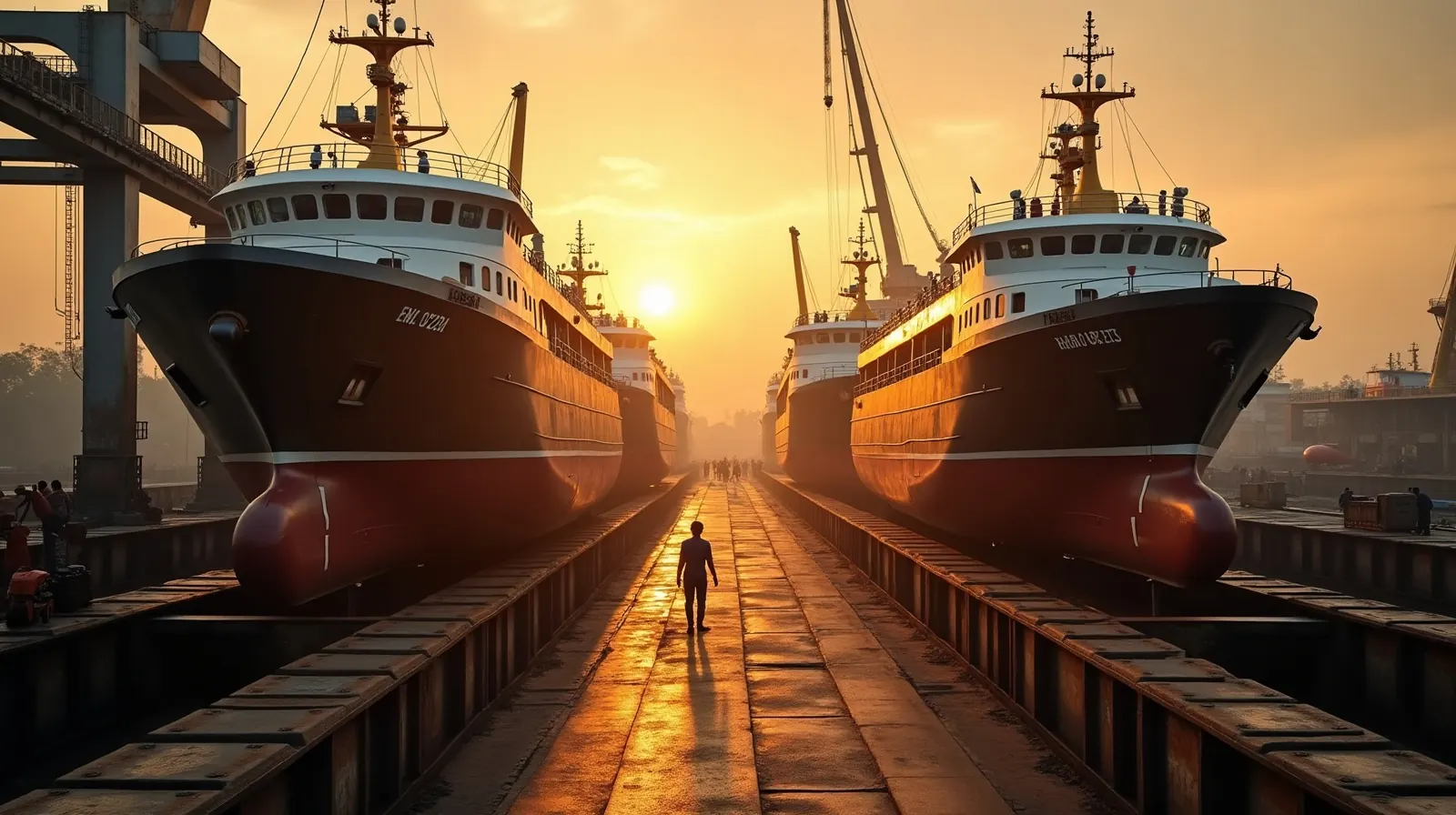
In short: Indonesian boat construction enters 2027 with order books shaped by four currents: charter fleet renewal in the east after strong tourism seasons, a government-driven ferry and workboat replacement cycle, steady export demand for FRP serial craft, and a maturing owner base that contracts professionally. Capacity at the credible yards is tightening — owners planning a 2027 start should lock design and yard slots in the coming months, not next year.
Every January we reconcile what we see across our yard network — enquiries, contracts signed, slipway bookings, timber and plate orders — into a working picture of where Indonesian boat construction is heading. The 2027 picture is one of disciplined growth: not a speculative boom, but full order books at the yards that have earned reputations, and longer queues for the trades everyone shares. Here is the sector-by-sector read, and what it means for anyone planning a build.
Charter and expedition: the eastern engine
The strongest single demand line remains charter tonnage for Komodo, Raja Ampat and the wider east: phinisi-style liveaboards, dive platforms and expedition conversions. Successive strong seasons have operators renewing fleets and first-time owners entering the market, with briefs growing more professional each year — survey-backed contracts, staged payments, supervision. Design queues at the naval architecture offices serving this segment now run months deep, and the recognised wooden yards, including the Sulawesi communities on our Bulukumba page, are quoting keel-laying dates well into 2027. Owners exploring this segment should start with our charter yacht construction and liveaboard construction pages — and budget lead time for the timber itself, since seasoned ulin and bitti stocks are the quiet constraint nobody advertises.
Ferries, workboats and the state cycle
The public-sector current runs deeper and slower: replacement of ageing inter-island ferries, port service craft, patrol boats and fisheries vessels. Steel yards in Batam, Surabaya and Makassar carry multi-year government and operator programmes, the sector we profiled in our review of Indonesia’s passenger boat workhorse sector. For private clients the practical consequence is competition for the same welders, class surveyors and engine agents — another reason early contracting matters. Serial FRP production lines, meanwhile, report steady export and domestic fleet orders for the classes we walked through in our production line article, with multi-hull contracts increasingly specifying per-hull testing and documentation as standard.
What owners are specifying differently for 2027
Three specification shifts stand out in current contracts. First, documentation as deliverable: photographic build records and commissioning files are moving from courtesy to contract clause. Second, lifecycle thinking: clients increasingly commission ten-year cost modelling across materials before choosing — the analysis we published as cost curves compared — rather than buying on entry price. Third, payment security: escrowed milestones and insurance verification are now routine asks from foreign and domestic owners alike. The professionalisation is welcome; it rewards exactly the yards that deserve the work, and it is visible in how projects are being run region by region, from Batam’s industrial lines to the yard scenes we have profiled in Kendari.
Capacity, prices and the honest caveats
Expect firm but not runaway pricing through 2027: yard labour rates rising moderately, imported equipment tracking global marine supply chains, USD pricing at the professional yards stable enough to contract against — current bands are in our cost guide. The caveats are the perennial ones. Order-book strength never guarantees an individual yard’s cash discipline, so payment structure and supervision matter exactly as much in a good market as a bad one. And tight capacity tempts yards to overbook — the origin story of many of the stalled hulls that reach our completion and takeover desk. A full order book at your chosen yard is a reason for stage gates, not a substitute for them.
Planning a 2027 start? Move now
The sequence that protects you: brief and feasibility this quarter, design and yard selection next, contract with staged payments and supervision after that — so your keel lays on schedule instead of joining a queue. Start from our boat construction in Indonesia overview, then request a free consultation, message us on WhatsApp at +62 811 3941 4563, or email [email protected]. We will tell you honestly which segments have room, which yards have slots, and what your project would need to hold one.
Frequently Asked Questions
How far ahead are Indonesian yards booked for 2027?
The recognised wooden charter yards and the busier steel facilities are quoting starts six to fourteen months out; serial FRP lines remain the most flexible, at roughly three to six months for configured boats. Individual capacity changes monthly — which is the argument for securing a slot with a signed design phase early.
Will build prices rise in 2027?
Our working assumption is moderate movement: labour and seasoned timber trending up in the wooden segment, steel and equipment tracking global markets, and quality FRP stable on serial volume. Owners hedge most effectively by contracting fixed-price milestones with clearly scoped change orders, in USD.
Which segment offers the shortest path to a new vessel?
Serial production craft: a configured speedboat or fast utility hull can deliver inside six months. Custom charter and expedition tonnage is the longest path — typically eighteen to thirty months from brief to handover including design, which is precisely why 2027 seasons are being contracted now.
Does a strong market make owner supervision less necessary?
More necessary. Full yards stretch trades across more hulls, and schedule pressure is where quality shortcuts breed. Stage gates, hold points and independent survey visits cost the same in any market and repay most when everyone is busy.

Written by
