
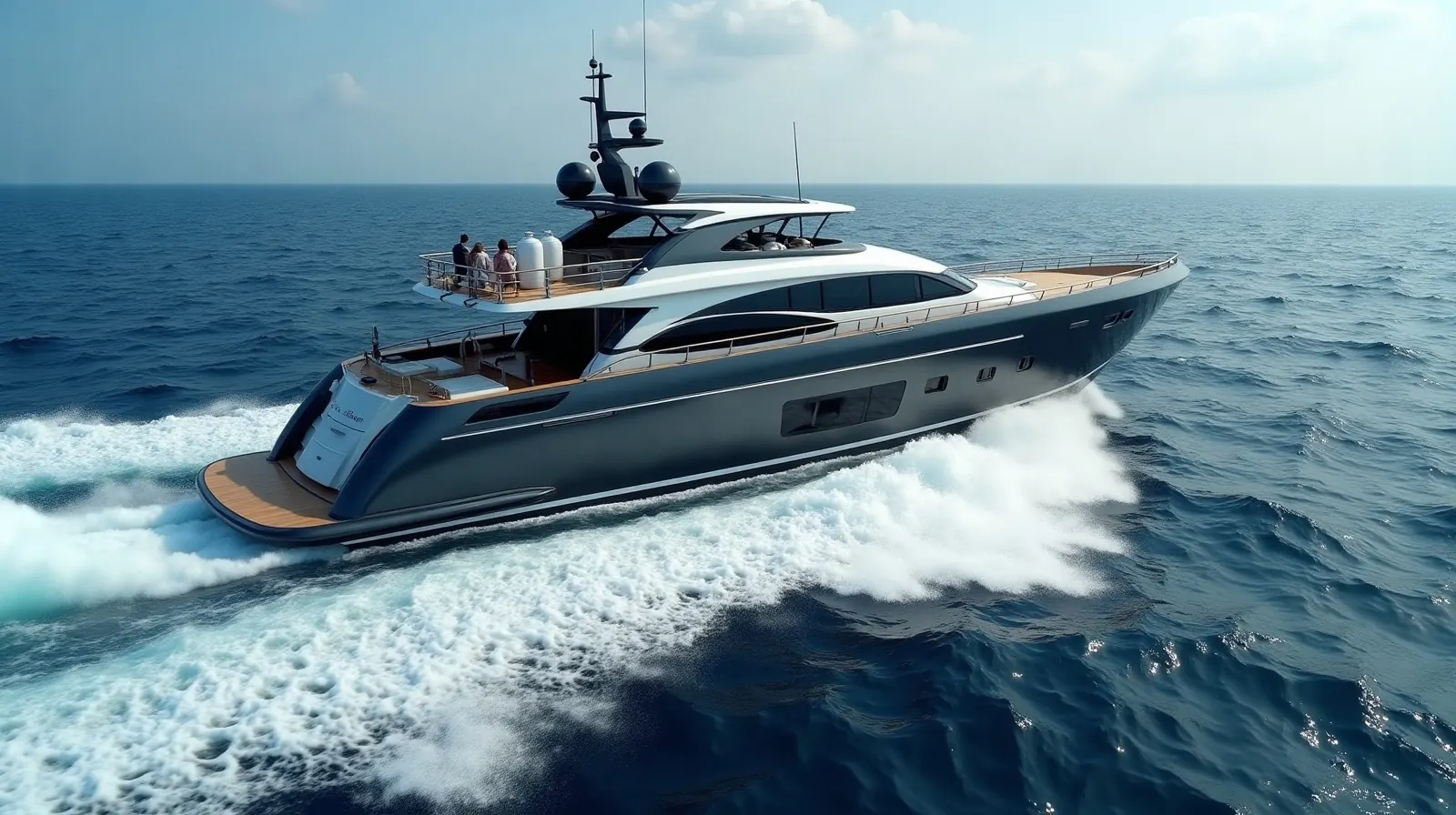
In short: A failed sea trial is information, not catastrophe. When a new build misses contract speed, vibrates, overheats or misbehaves under helm, the response is a disciplined diagnostic sequence: verify the measurement, isolate the variable, trace the cause, and allocate the fix under the contract’s trial and acceptance clauses. Owners who pre-agreed trial protocols and tolerances resolve failures in weeks; owners who left “sea trial” as two vague words in the contract inherit an argument.
Sea trials are the examination a new vessel sits after years of construction — and sometimes the vessel does not pass. Perhaps the contract promised 12.5 knots and the log shows 11.6; perhaps a vibration appears at 1,400 rpm; perhaps the engines never reach rated speed. Having conducted trials on our own deliveries and been called to diagnose other yards’ disappointments, we can report that most failures have mundane causes and contractual solutions. Here is how the professionals work the problem.
First: verify the measurement itself
A surprising share of “failures” dissolve under proper measurement. Contract speed means nothing without stated conditions: displacement, fuel and water load, sea state, current, hull cleanliness, engine rating tolerance. A trial run one way against a two-knot Indonesian tidal stream fails a vessel that is actually on specification — which is why protocol requires reciprocal runs on a measured course, averaged, at defined load, with GPS and rpm logged. Before any dispute, rerun the measurement properly. The trial protocol should have been fixed at contract stage with the tolerances that class practice accepts; our BKI involvement article covers how class witnesses trials on classed vessels, and our naval architecture page explains the predictions the trial is testing against.
The usual suspects, in order of likelihood
Propeller mismatch leads the table. If the engines cannot reach rated rpm, the propeller is over-pitched; if they overspeed at less than full power, under-pitched. Either way the fix — repitching or replacing the wheel — is days, not months, and the diagnosis is readable straight from the trial logs.
Displacement creep comes second. Vessels grow during fit-out: extra teak, extra tankage, a heavier interior than the weight estimate assumed. An honest weight audit against the design displacement tells you whether the hull is simply carrying more boat than the speed prediction was made for.
Fouling and finish. A hull that waited months between launch and trial in a warm harbour can drag a measurable speed penalty in growth alone. Clean the bottom, rerun the trial — genuinely, this resolves cases.
Vibration and alignment. Shaft alignment performed on the hard shifts once the hull takes its floating shape; couplings, cutlass bearings and engine mounts then telegraph it as vibration bands. Realignment afloat is standard commissioning work, covered in our six-week shakedown article.
Cooling and exhaust faults — undersized sea strainers, kinked exhaust runs, airlocked keel coolers — announce themselves as overheating at sustained load and are traceable with temperature logging at each throttle step, exactly the discipline a proper hold-point regime instils before trials ever start.
Who pays: reading the contract’s trial clauses
A professional build contract answers four questions before the first trial: What is measured, under what protocol? What tolerance applies (a common structure: within half a knot of contract speed attracts no remedy; beyond that, liquidated damages per tenth of a knot; beyond a floor value, rejection rights)? Who pays for remediation and retrial? And does the acceptance clock pause during remediation? With those answers written down, a failed trial becomes administration. Without them, it becomes leverage — usually against whoever needs the vessel soonest. Our guides to shipyard contract law and warranty claims cover the clause architecture; an independent trial witness through our survey service keeps the data itself above argument.
When the failure is real and structural
Occasionally the trial reveals something deeper: a hull built visibly off its lines, stability that fails the inclining, structure that works in a seaway. These are the hard cases — remediable, but only with engineering honesty about cause and cost. They are also, overwhelmingly, failures of supervision during construction rather than of trial day, which is the argument for the photographic record we describe in digital build diaries and for independent oversight from keel-laying onward. Where a relationship has broken beyond repair mid-project, our completion and takeover service exists to carry a troubled hull to a trial it can pass.
Heading into trials? Stack the odds first
The time to prevent a trial failure is the eighteen months before it. Request a free consultation, message us on WhatsApp at +62 811 3941 4563, or email [email protected] — whether you are drafting trial clauses, approaching trials on a current build, or holding a disappointing trial report someone else produced. We will read the data before anyone starts negotiating from it.
Frequently Asked Questions
What speed tolerance is normal in a build contract?
Common Indonesian and regional practice: no remedy within 0.3 to 0.5 knots of contract speed at specified load; liquidated damages per tenth of a knot beyond that; owner rejection or renegotiation rights if the shortfall exceeds roughly one knot. The precise numbers matter less than having numbers at all.
How many sea trials should a new build get?
At minimum: a builder’s preliminary trial to find and fix issues, then the official acceptance trial under the contract protocol, witnessed by the owner’s representative and class where applicable. Complex vessels add dedicated endurance and systems trials during commissioning.
The yard says the trial failure is my design office’s fault. Now what?
This boundary dispute is why design responsibility must be allocated in writing. If the yard built to approved drawings, performance risk sits with the design; if the yard deviated or the weight grew in construction, it sits with the yard. An independent weight audit and build-record review usually settles which happened.
Can a vessel be delivered with a known trial deficiency?
Yes, by agreement: acceptance with a documented punch item, a retention held against the fix, and a deadline for remediation. This is often commercially sensible — a propeller repitch queued for the next docking should not hold a charter season hostage, provided the retention protects you.

Written by
