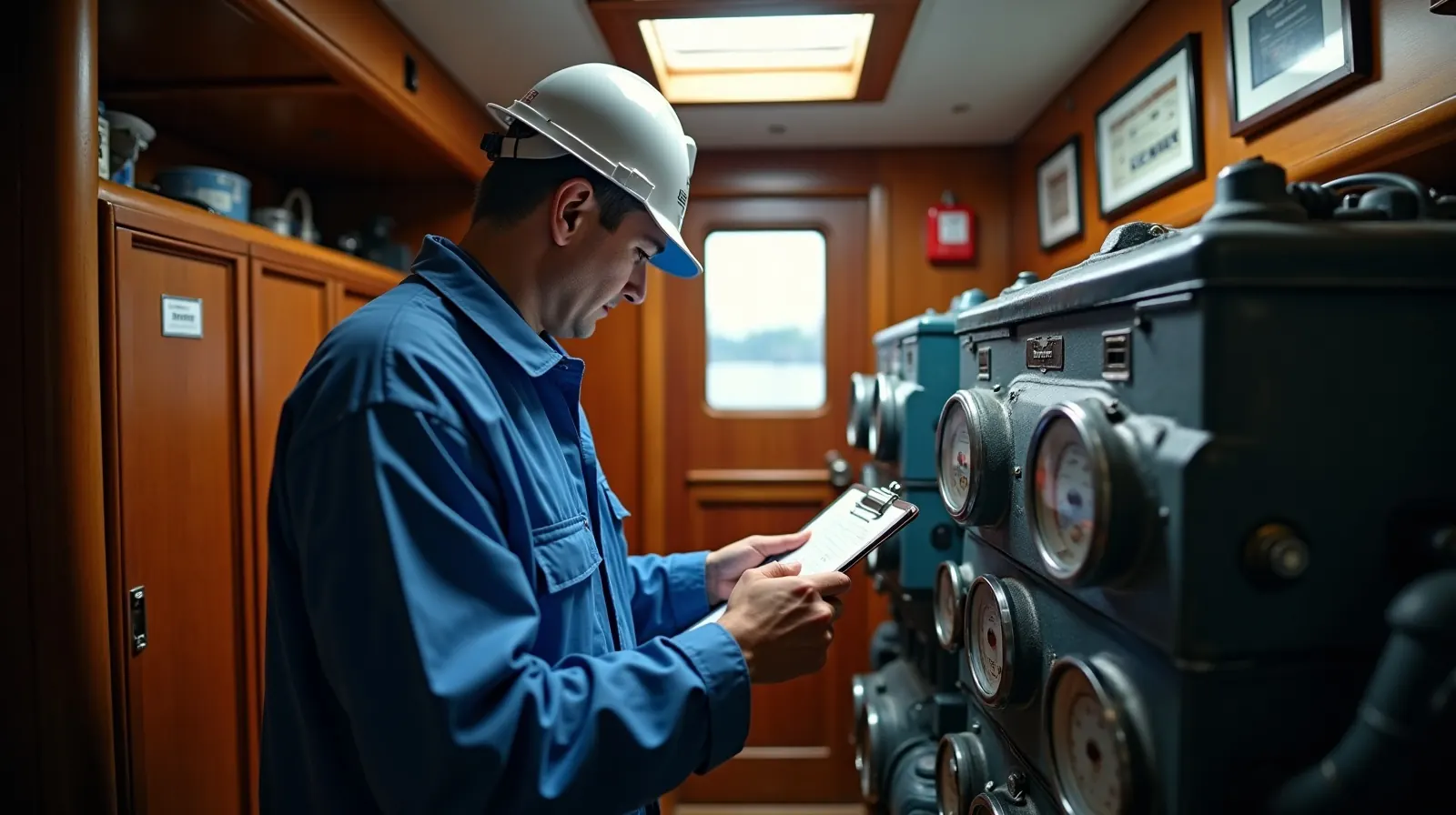
In short: Launch day is not delivery day. Between the hull touching water and the owner taking the helm sits commissioning: roughly six weeks of system-by-system testing, adjustment and documented sign-off. Engines, electrics, plumbing, navigation, safety gear and deck machinery each get run under real load, faults get logged and cleared, and the vessel earns its handover file one checklist at a time.
The moment a new build floats for the first time is emotional — we covered the mechanics of that day in our article on launch day logistics. What follows is less photogenic and far more consequential. Commissioning is the phase where a collection of installed equipment becomes a working ship, and where the difference between a disciplined Indonesian yard and a casual one shows up in the owner’s first year of operation. This article walks through the six-week shakedown as we run it, system by system.
Week one and two: dockside energisation
Nothing leaves the berth in the first fortnight. Every system is energised for the first time in a controlled sequence, because faults found alongside cost a fraction of faults found at sea.
Electrical systems come first. We megger-test every circuit, verify breaker coordination, load the generators individually and in parallel, and run the battery banks through full charge-discharge cycles. Wiring faults are the single most common commissioning finding on Indonesian builds — usually a crimp that passed visual inspection but fails under vibration.
Fuel, fresh water and black water systems are pressure-tested, flushed and calibrated. Tank level senders are verified against physical soundings, not trusted from the factory. Watermakers are run, membranes flushed, and product water tested for salinity.
Main engines and gearboxes are run at the dock against spring lines: alignment rechecked after the hull has taken up its floating shape, stern gland drip rates set, exhaust back-pressure measured. A hull that was faired and aligned on blocks, as described in our QA hold points article, still shifts subtly once afloat — commissioning catches that shift.
Week three and four: sea running under increasing load
Once dockside checks close out, the vessel begins short runs, each one longer and harder than the last. The pattern is deliberate: half load before full load, sheltered water before open water, daylight before night running.
Engine temperatures, oil pressures and fuel burn are logged at every throttle step and compared with the engine maker’s commissioning curves. Steering is proven hard-over to hard-over at speed. Anchor windlass, davits, cranes and tender launch systems are cycled under real weight. Navigation electronics are calibrated — compass deviation swung, radar aligned, autopilot tuned, AIS verified against a second station. On charter builds we also run the hotel load test: full air-conditioning, galley, laundry and lighting simultaneously, because that combination is what the generators will actually face with guests aboard.
Faults found in this phase go into a numbered defect log with severity ratings. The log is not an embarrassment; it is the product. A commissioning file that claims zero findings across six weeks has simply not been kept honestly. What matters is that every line closes with a verified fix — and the formal proving run that follows, which we describe in our article on sea trial failures, goes far more smoothly because of it.
Week five: crew familiarisation and documentation
A commissioned vessel handed to an unprepared crew de-commissions itself within months. Week five puts the permanent crew through every system with the installers still on hand: engine room routines, electrical distribution, watermaker care, fire and bilge systems, and the maintenance schedule that keeps warranties alive — a point that matters enormously if you ever need to bring a warranty claim against the yard.
In parallel, the handover file is assembled: as-built drawings, equipment manuals, test records, tank tables, spare parts inventory, and the commissioning log itself. On builds we supervise, the file is digital, indexed and duplicated — one copy aboard, one with the owner, one archived with us.
Week six: the proving passage and acceptance
The shakedown ends with a proving passage of at least 24 to 48 hours — real distance, real watchkeeping, real weather. Fuel consumption is reconciled against the log, autopilot holds course through the night, and the crew runs the ship without the commissioning team stepping in. Only then do we recommend the owner sign final acceptance and release the last payment milestone. Vessels we deliver through our build completion service follow exactly the same sequence, because a rescued project deserves the same finish line as a new one. The full journey from contract to this point is mapped on our construction process and timeline page.
Plan your commissioning before you launch
If your build is approaching launch — with us or with another yard — get the commissioning plan agreed in writing now, not after the christening. Request a free project consultation, message us on WhatsApp at +62 811 3941 4563, or email [email protected] and we will review your build schedule and set out a commissioning scope that protects your first year afloat. An independent surveyor through our marine survey service can witness the process end to end.
Frequently Asked Questions
How long does commissioning a new boat in Indonesia take?
Plan for six weeks on a typical 25 to 50 metre build: two weeks dockside, two weeks of progressive sea running, one week of crew familiarisation and documentation, and a final proving passage with acceptance. Complex charter vessels with large hotel systems can extend to eight weeks.
Who pays for fuel and crew during commissioning?
It should be stated in the build contract. Common practice in Indonesia is that the yard carries costs until acceptance, while the owner supplies or funds the permanent crew from familiarisation week onward. Ambiguity here is a frequent source of friction, so fix it in writing before launch.
Can I move aboard during the shakedown period?
We advise against living aboard in the first two weeks, when systems are being energised and opened repeatedly. From the sea-running phase onward, many owners join passages — it is the fastest way to learn the vessel and to see the defect log being worked honestly.
What happens if a major fault appears during commissioning?
It is logged, the yard remedies it under the build contract, and the affected tests repeat. Commissioning exists precisely to surface faults while the yard’s obligation and workforce are still fully engaged — which is why compressing or skipping the shakedown to meet a season deadline is a false economy.

Written by
