In short: Ferries and passenger boats are the workhorse of Indonesian boatbuilding. An archipelago of 17,000 islands moves people by water daily, and domestic yards deliver everything from 12-metre wooden island shuttles to 60-metre steel RoPax ferries. For operators, the sector offers proven designs, deep regulatory experience and yard pricing in USD that compares well internationally — provided class, stability and safety compliance are managed from the first drawing.
Ask where Indonesian boatbuilding earns its living and the honest answer is not superyachts — it is the daily grind of moving people between islands. Passenger vessels are the volume backbone of the industry, and the experience yards have accumulated building them is exactly what makes Indonesia credible for boat construction of every other type. This article surveys the sector: the vessel classes, the yards, the rules, and what an operator commissioning a new passenger boat should watch.
The vessel classes that carry the archipelago
Island shuttles and harbour boats (10–20 m). Wooden or FRP, 20 to 60 passengers, built in coastal yards across the country. Simple, repairable, and priced from roughly USD 60,000 to USD 250,000 depending on material and engines. Many are built by the same communities that build tour boats and dive tenders.
Fast passenger ferries (20–40 m). Usually FRP or aluminium catamarans and monohulls running 25 to 35 knots on routes like Bali–Lombok and Batam–Singapore feeders. This class overlaps heavily with the serial-production methods we describe in our look inside a speedboat production line, scaled up with crashworthy seating, evacuation systems and commercial engine packages.
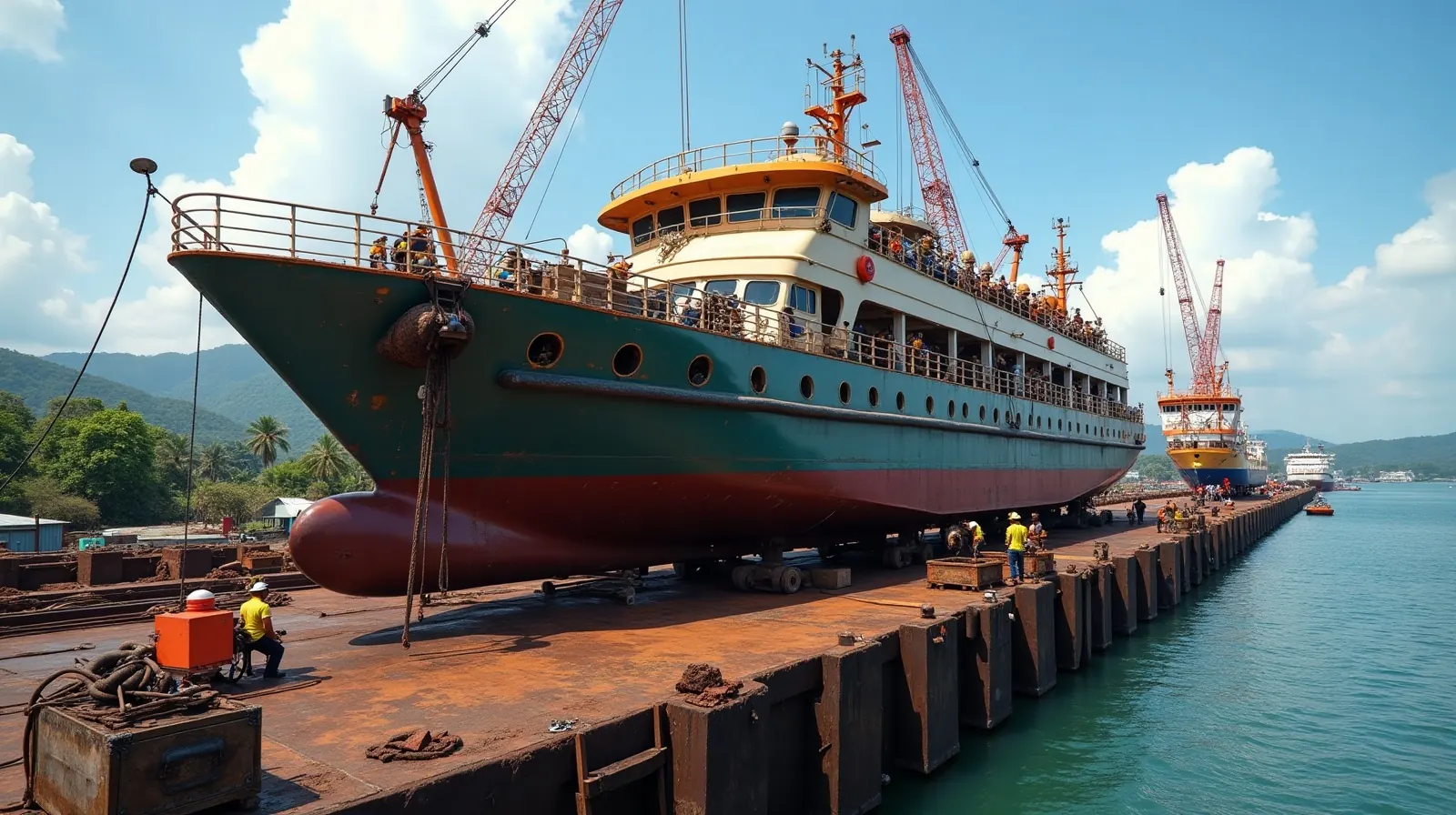
Steel RoPax and general passenger ferries (40 m and up). Vehicle decks, higher passenger counts, government and private operators. These are shipyard projects in the full sense — plate cutting, block assembly, class survey at every stage — the discipline covered in our steel construction guide, and often built alongside the tugs and barges of the cargo and workboat sector.
Where they are built
Steel passenger tonnage concentrates in the industrial yards of Batam, Surabaya and Jakarta, with strong secondary capacity in Makassar and Bitung. FRP fast-ferry production clusters around Batam and Tangerang, while wooden passenger boats are built almost everywhere people are — including the Sulawesi yard communities profiled on our Bulukumba boat construction page, whose builders move fluently between tour boats and island shuttles. Matching route, vessel class and yard is a large part of getting the economics right, and it is the first conversation we have with any operator.
Rules of the road: class, stability and safety
Passenger carriage is the most regulated corner of Indonesian boatbuilding, and rightly so. Domestic passenger vessels fall under Ministry of Transportation oversight with BKI classification for larger tonnage — the survey-by-survey involvement we detail in our BKI classification guide. Stability approval, subdivision, life-saving appliance counts, fire zones and evacuation analysis are not paperwork afterthoughts; they shape the general arrangement from the first sketch. Our summary of Indonesian marine safety standards covers the SOLAS-derived national rules that apply by size and route.
The practical advice: bring the regulator and class into the project before steel is cut or moulds are laid. Retro-fitting compliance into a hull designed without it is the single most expensive mistake passenger-boat clients make — and the reason some of the stalled projects that reach our completion desk exist at all.
What operators should specify — and what it costs
Fuel burn per seat is the number that decides whether a route makes money, so hull form and engine selection deserve naval-architecture attention, not catalogue defaults. Specify corrosion protection for the operating environment, seating and boarding arrangements for the real passenger profile (luggage, motorbikes, cargo on roofs — honesty beats brochure renderings), and a maintenance regime the operator can actually sustain. Indicative complete-vessel pricing in today’s market: fast FRP 30-metre ferries from around USD 1.2 to 2.5 million; steel 45-metre RoPax from roughly USD 3.5 million upward. Our construction cost guide breaks down the drivers, and our analysis of 2027 order books shows why ferry replacement demand is set to keep yards busy for years.
Commission a passenger vessel with us
Whether you operate a single island shuttle or a multi-route ferry fleet, we can take your project from route analysis to certified delivery. Request a free feasibility consultation, message us on WhatsApp at +62 811 3941 4563, or email [email protected]. Full service scope is on our ferry and passenger boat construction page.
Frequently Asked Questions
How long does it take to build a passenger ferry in Indonesia?
A 30-metre FRP fast ferry typically runs 12 to 18 months from contract to certification; a 45-metre steel RoPax runs 20 to 30 months including class surveys and inclining. Add three to six months up front for design approval and stability work — time that repays itself at certification.
Can foreign operators order passenger boats from Indonesian yards?
Yes. Export builds are routine, with the vessel certified to the flag state’s requirements instead of, or alongside, Indonesian domestic rules. The yard and design office need the flag decided at contract stage, since it drives equipment and documentation choices.
Wooden, FRP or steel for a passenger route?
Short sheltered routes with modest passenger counts still suit wooden or FRP construction for build cost and repairability. Speed-critical routes favour FRP or aluminium; vehicle decks and rough open-water crossings favour steel. Route length, sea state and passenger volume decide it — not fashion.
What certification does a domestic passenger boat need?
Depending on size and route: Ministry of Transportation seaworthiness and manning certificates, BKI class for larger vessels, approved stability documentation, and periodic surveys thereafter. Vessels carrying more than a threshold passenger count also require evacuation and life-saving appliance approval keyed to the route category.

Written by
