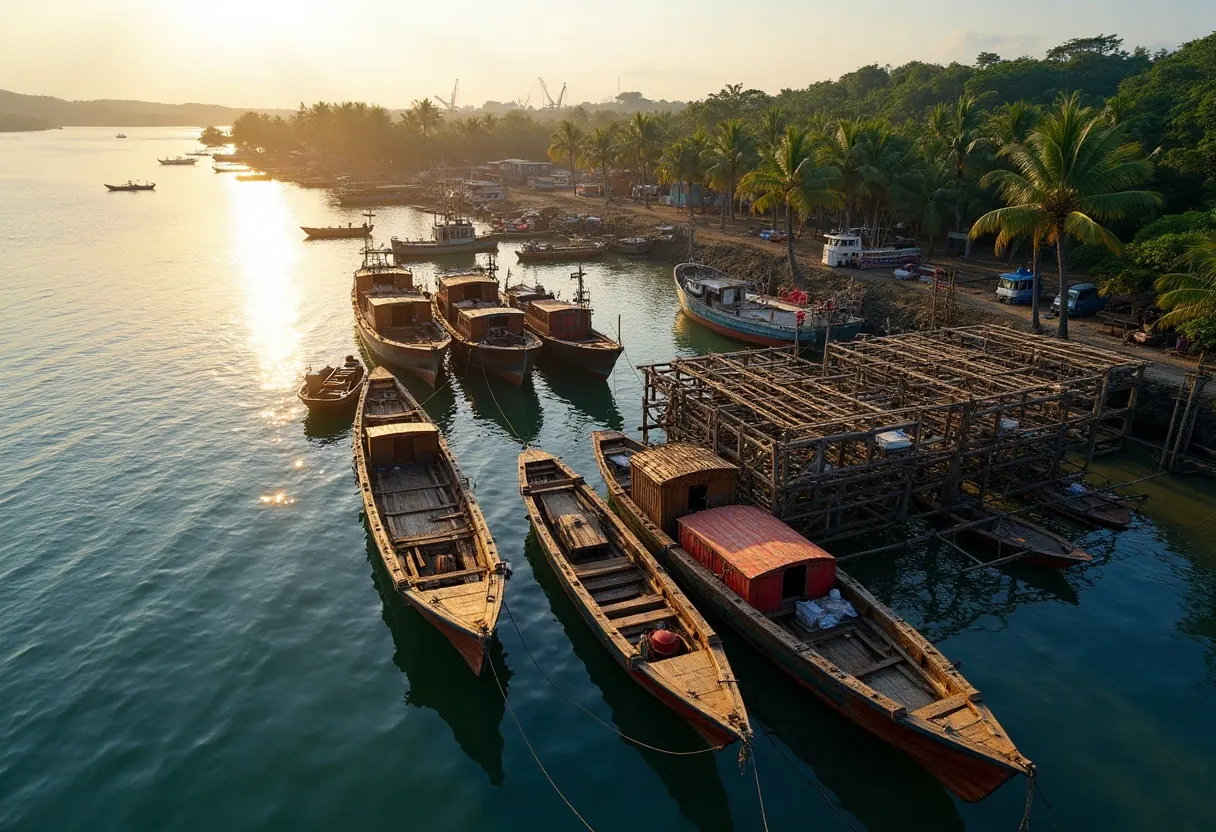
In short: Kendari, the capital of Southeast Sulawesi, is one of Indonesia’s least publicised but most productive boatbuilding hubs. Its sheltered bay hosts yards turning out fishing fleets, ferries, patrol craft and steel workboats, supported by a deep local trades pool and direct timber and steel supply lines. For owners, Kendari offers competitive build capacity — provided contracts and supervision are handled with the same discipline you would apply anywhere else in the archipelago.
Ask most foreign owners to name Indonesia’s boatbuilding centres and you will hear Batam, Surabaya and the famous phinisi beaches of Bulukumba. Kendari rarely makes the list — yet the yards around Kendari Bay have been building and repairing working vessels for decades, and the city quietly anchors the maritime economy of Southeast Sulawesi. This article maps the Kendari yard scene: what gets built there, who does the work, what it costs, and how the city fits into our national shipyard network.
Why Kendari became a build hub
Geography did most of the work. Kendari Bay is a long, naturally sheltered harbour — one of the best protected anchorages in eastern Indonesia — with flat foreshore suitable for slipways and enough depth for vessels in the 60-metre class. The city sits at the centre of some of the country’s richest fishing grounds in the Banda and Flores seas, so demand for hulls, engines and repair has always been local and constant.
Two further forces shaped the modern scene. The nickel industry boom across Southeast Sulawesi created demand for barges, crew boats and steel workboats, pulling steel fabrication skills into the region. And the government’s periodic fleet programmes — fishing vessels, ferries and patrol craft ordered in batches — gave Kendari yards experience with drawings, class surveys and delivery schedules that beach yards elsewhere never acquired.
What the yards actually build
Fishing vessels remain the backbone: wooden and increasingly fibreglass hulls from 10 to 30 metres, built for pole-and-line, purse seine and longline fleets. The transition from timber to FRP is further advanced here than in most of Sulawesi, for the reasons covered in our fibreglass construction guide.
Ferries and passenger craft are the second pillar. Southeast Sulawesi is an island province — routes to Muna, Buton and the Wakatobi archipelago all run on locally built and locally maintained tonnage, the workhorse sector we describe in our ferry construction page.
Steel workboats and barges serve the mining economy: landing craft, fuel barges and tugs, generally built to BKI class. Several Kendari fabricators run certified welders and maintain relationships with BKI surveyors from the Kendari port office.
Speedboats round out the scene — the fast outboard-powered launches that serve as taxis across the bay and out to the islands, a serial-production niche similar to what we describe for speedboat builders nationally.
The trades pool: Kendari’s real asset
Vessels are only as good as the hands that build them, and Kendari’s labour market is unusually deep for a provincial capital. Buginese and Butonese boatbuilding families — heirs to the same seafaring tradition that produced the phinisi — supply the carpentry and caulking trades. The mining sector trains and certifies welders at a steady rate, many of whom move between industrial fabrication and shipyard work. Marine engine mechanics are plentiful because the fishing fleet keeps hundreds of diesels running year-round.
For an owner, this means crews can be scaled up quickly mid-build. It also means quality varies yard by yard and crew by crew, which is why we apply the same QA hold points in Kendari as at any other site in our network.
Costs, logistics and the honest caveats
Build pricing in Kendari generally lands close to our national benchmarks — see our construction cost guide — with labour rates modestly below Java and materials modestly above, since fittings and resins ship in through Makassar or Surabaya. Steel arrives reliably via the mining supply chain. Hardwood supply is workable but increasingly regulated; legal sourcing documentation matters, as it does everywhere, and we verify it for every timber lot, as explained on our materials page.
The caveats are the usual provincial ones. Few Kendari yards employ in-house naval architects, so drawings and engineering come from outside. Covered halls are scarce; most construction happens in open air with tarpaulin protection. And contract practice is informal by default — the discipline of specifications, stage payments and inspections must be brought by the buyer’s side. That is precisely the role our supervision model plays, whether a hull is rising in Kendari, elsewhere in Sulawesi, or being recovered through our build completion service after a project elsewhere went wrong.
Considering a build in Southeast Sulawesi?
If your project fits Kendari’s strengths — working vessels, steel craft, FRP fishing hulls or passenger boats — we can scope yards, assemble the contract and supervise the build end to end. Request a free project quote, reach us on WhatsApp at +62 811 3941 4563, or email [email protected] and tell us what you want to put in the water.
Frequently Asked Questions
Is Kendari suitable for a luxury yacht or phinisi charter build?
Generally no — the interior joinery and finishing trades that luxury projects demand are concentrated around Bulukumba, Bali and Java. Kendari’s strength is working tonnage: fishing vessels, ferries, barges and steel workboats built to commercial standards.
Can Kendari yards build to BKI class?
Yes, several can. The steel fabricators serving the mining industry routinely build barges and workboats under BKI survey, and the local port office provides surveyor attendance. Class involvement should be written into the contract before the keel is laid.
How do build costs in Kendari compare with Batam or Surabaya?
Labour is typically less expensive than Batam and comparable to or below Surabaya, while imported materials and equipment cost slightly more due to onward freight. For steel workboats and fishing vessels the delivered USD cost usually lands within a few percent of the national benchmarks in our cost guide.
Does your company supervise builds in Kendari directly?
Yes. Kendari is part of our national yard network: we scope and vet the yard, hold the contract, run stage inspections and manage class attendance, exactly as we do for builds in Sulawesi’s other hubs and across Indonesia.

Written by
