In short: Launching a new build in Indonesia is an engineering operation in its own right. The method — travel lift, crane, slipway or marine airbags — is dictated by vessel weight, yard infrastructure and shoreline, while the tide table dictates the date and often the hour. Airbag launches, the standard for beach-built vessels, need calculated bag layouts, a groomed launch path and a spring tide window. Plan launch logistics months ahead, insure the day itself, and never let ceremony pressure override engineering judgement.
Months or years of construction converge on a single morning when the hull finally takes its own weight in water. Done well, a launch is almost anticlimactic. Done badly, it is how hulls crack, cradles collapse and delivery dates slip by a season. This article covers how vessels actually get wet in Indonesia — cranes, slipways and the airbag method that dominates the beach yards — and the planning discipline behind a safe launch day. It continues the sequence our process and timeline guide describes, at the step where the yard phase ends.
Choosing the method: four ways into the water
Travel lift. The gentlest option — slings, a wheeled gantry, a controlled lowering — but available only at equipped facilities, mostly in Batam, Bali and the larger Java yards, and limited by lift capacity, typically up to a few hundred tonnes.
Mobile crane. Common for speedboats, tenders and vessels into the low tens of tonnes. The engineering lives in the lift plan: certified slings, spreader bars sized to the hull, verified lifting points and a crane with genuine capacity margin at the working radius. Most crane incidents we know of trace to radius arithmetic, not equipment failure.
Slipway. The classic railway into the sea, standard at established commercial yards for ferries and workboats. Slipways reward maintenance and punish neglect — a surveyed cradle and rails are prerequisites, and the vessel’s weight distribution on the cradle needs calculation, not custom.
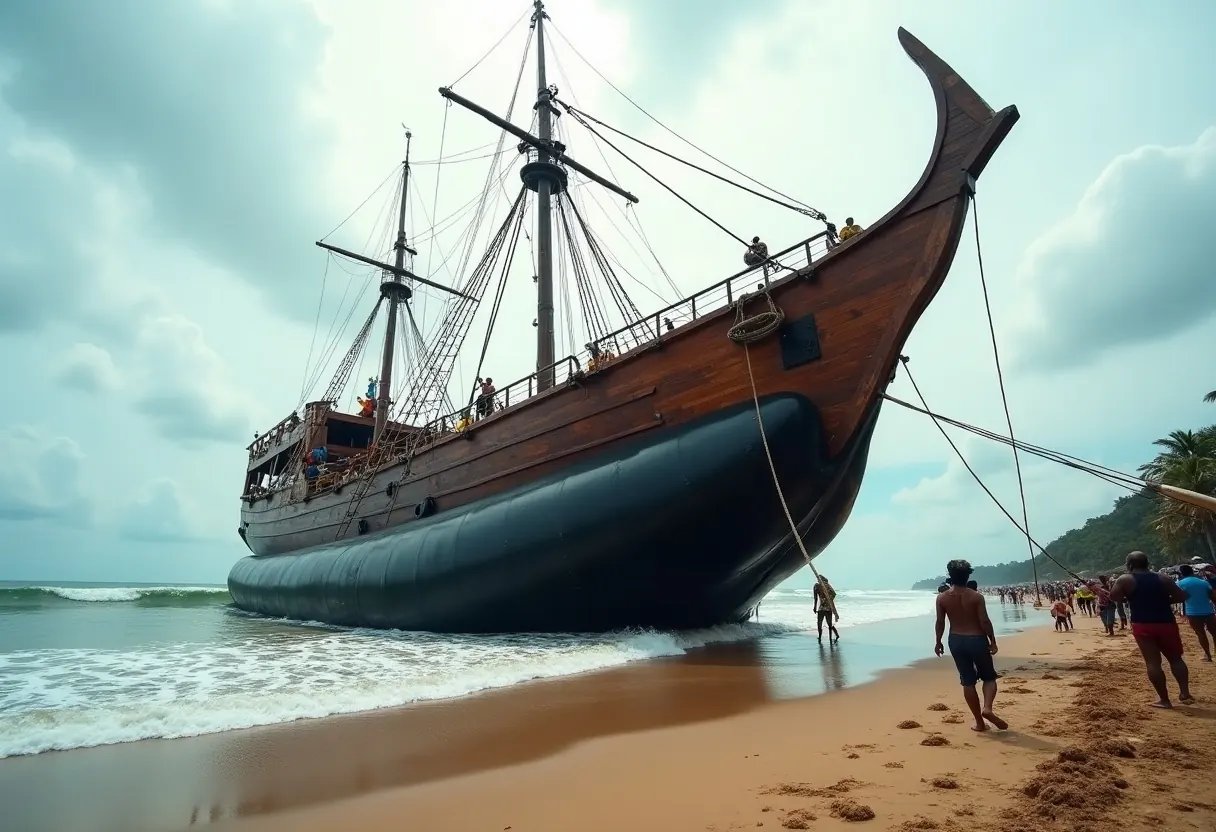
Marine airbags. The signature method for beach-built vessels, and the way virtually every large phinisi from Bulukumba’s yards reaches the sea. Cylindrical rubber bags are inflated under the hull; the vessel rolls down a prepared gradient into the water, controlled by winches or excavators. Airbags scale remarkably — Indonesian yards routinely launch vessels of several hundred tonnes this way — but only with proper engineering.
Airbag launches: the engineering behind the spectacle
An airbag launch that looks like improvisation should worry you; a good one is calculated. The bag layout — diameter, ply rating, quantity, spacing — is worked from the vessel’s launch weight and hull shape, so bag pressures stay within rated limits with a safety margin per bag and a reserve bag or two in the string. The launch path is groomed and compacted, cleared of rock and debris, with gradient checked over the full run including the submerged section: hollows or soft patches let the hull pivot or stall mid-launch, which is where keels get hurt.
Restraint matters as much as movement. The hull is held by winch lines or anchored excavators and released deliberately — a run-away launch is dramatic footage and a fine way to find the one rock the survey missed. Once afloat, bags are recovered, and the vessel comes alongside for the first stability checks. We treat the entire evolution as a held inspection under our QA hold-point regime: launch plan, bag certificates and path survey are signed off before inflation begins.
Tides, weather and the calendar nobody can negotiate with
Beach and slipway launches in Indonesia run on the tide table. A heavy hull wants the biggest water available, which means the spring tides around new and full moon — a window of two or three workable days, twice a month, at hours the moon dictates. Miss the window through unfinished work and the next real chance is a fortnight away; miss the season and the monsoon can push a launch by more than a month, a risk our scheduling builds in from the start — and one reason stalled hulls that reach our completion and takeover service so often carry weather damage from waiting out seasons they were never meant to see.
Weather adds the second veto. Onshore swell during the launch window can halt everything even at perfect tide height, because a hull half-in, half-out of surf is the worst place a new build can be. The launch master holds absolute authority to postpone, and the owner’s role on the day is to support that authority — ceremony, guests and catering must never drive the decision to commit a hull to the water.
Paperwork, insurance and what happens the moment she floats
Launch day has a legal dimension. The builder’s risk insurance must explicitly cover the launch evolution — some policies treat it as an excluded “movement” — and on classed builds the BKI surveyor’s attendance at launch and the immediately following draft readings belong in the survey plan. First flotation is also the first data point for stability: draft marks are read against calculation, and any surprise here is investigated before ballasting and commissioning surveys proceed.
In Bulukumba, launch day carries ceremony centuries older than any class rule — prayers, offerings and the whole village on the beach. We budget for it, respect it, and schedule it the way the master builders always have: after the tide table has spoken.
Plan the launch before you lay the keel
Launch method shapes yard choice, build schedule and even structural detailing, so we plan it at contract stage, not at the end. Commissioning a vessel and want the whole path to the water engineered from day one? Request a free project quote, message us on WhatsApp at +62 811 3941 4563, or email [email protected].
Frequently Asked Questions
How much does a marine airbag launch cost in Indonesia?
For a vessel in the 100 to 300-tonne class, budget several thousand to around USD 15,000 covering bag rental or purchase, ground preparation, winch or excavator hire and the launch crew — modest against the value it moves. Crane launches for small craft are typically USD 500 to 3,000 depending on crane size and mobilisation distance.
Why do Indonesian yards launch on spring tides?
Spring tides, around new and full moon, give the highest water levels of the month. A beach-launched hull needs enough depth at the end of its run to float free of the bags and ground; neap tides often simply do not provide it, so the tide table fixes the only workable dates.
Is an airbag launch safe for a large wooden hull?
Yes, when engineered: calculated bag layout, verified bag certificates, a surveyed and compacted path, and controlled restraint during the run. Wooden hulls spread launch loads well across their planking. The failures that occur trace to guesswork — too few bags, soft ground, uncontrolled release — not to the method itself.
What can stop a launch on the day itself?
Swell and wind at the launch window, ground softened by overnight rain, a bag failing its pre-inflation check, or unexpected draft readings as the hull starts to take water weight. The launch master’s postponement call is final; a fortnight’s wait for the next tide is always better than a damaged hull.

Written by
