In short: These are working case notes from a real takeover: a 53-metre wooden charter vessel abandoned at roughly forty percent completion, audited over eleven days, renegotiated, and brought to launch twenty months later. Owner and yard names are withheld by agreement. The lessons — audit first, settle yard debts in writing, re-baseline the schedule, and gate every payment to inspected work — apply to any rescue project in Indonesia.
Most of what is written about boat construction describes projects that went to plan. This article does the opposite. It reconstructs, stage by stage, how a stalled 53-metre charter build in South Sulawesi went from an exposed, half-planked hull to a certified, chartering vessel — and what it cost to get there. We publish it because owners considering our completion and takeover service keep asking the same fair question: what does a rescue actually look like in practice?
The situation at day zero
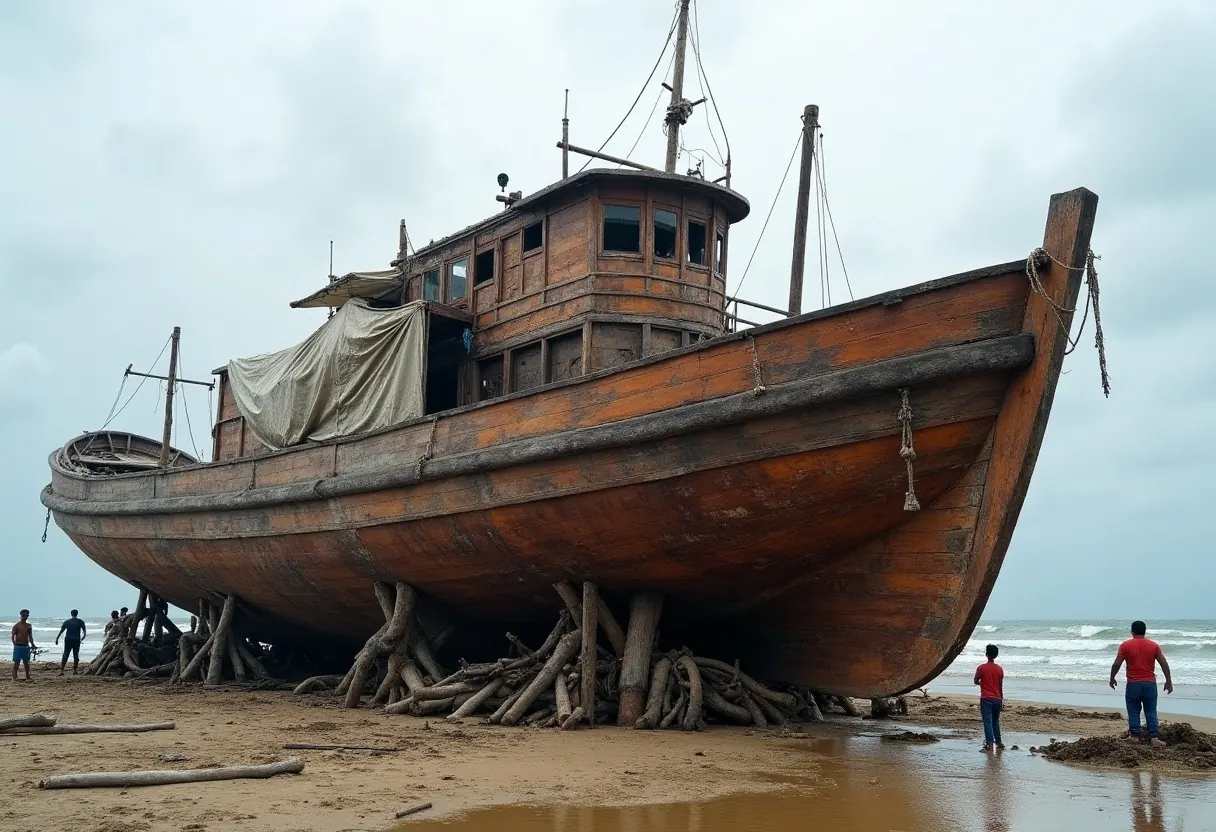
The vessel was conceived as a two-deck charter phinisi in the 50-metre class, ordered by a foreign owner directly from a beachfront yard without independent supervision. Payments had been made in irregular tranches over two years. When the relationship broke down, the project stopped with the keel, frames and roughly two-thirds of the planking complete. The hull then sat for fourteen months under partial cover.
The owner’s stated position: approximately USD 700,000 spent, and an unwillingness to spend “much more”. The yard’s stated position: an unpaid balance and a hull occupying valuable beach frontage. Neither party held a signed drawing set. This is a textbook stalled build, and far more common than the industry admits.
Case note one: the eleven-day audit
We began the way we begin every takeover, with the audit process described in our article on auditing a half-done hull and on our marine survey page. Two surveyors and a naval architect spent eleven days on structure, geometry and paperwork. The findings, summarised:
Structure: better than feared. The keel and principal frames were sound ulin and bitti — the yard’s core workmanship, as is often the case in Bulukumba’s yard villages, was genuinely good. Around eleven percent of installed planking needed replacement, mostly weather damage from the idle period.
Geometry: one real problem. Laser measurement showed a 90-millimetre asymmetry amidships, correctable at that stage of planking, expensive if discovered later.
Paper: the hard part. No signed specification, no class involvement to date, and a genuine gap between payments the owner could evidence and income the yard acknowledged.
Our cost-to-complete estimate came to a range with a midpoint near USD 1.1 million — measured against our published cost benchmarks for the class — plus a negotiated settlement of the yard balance.
Case note two: the reset agreement
The rescue nearly failed here, and rescues usually do. It took six weeks to land a four-party agreement: owner, yard, our company as completion contractor, and a jointly appointed escrow arrangement of the kind we describe in our guide to escrowed milestone payments. The essential terms: a documented settlement of the yard’s claim, transfer of the hull’s title to the owner with a signed release, our appointment under a fixed-scope completion contract with staged USD payments against inspected milestones, and BKI brought in to begin survey attendance from the first new structural work.
Nothing in the carpentry mattered until those signatures existed. We tell every owner the same thing: a rescue is a legal reconstruction first and a boatbuilding project second.
Case note three: twenty months to launch
Reconstruction followed our standard process and timeline discipline, compressed here to the decisive points. Months one to three: geometry correction, planking replacement, and completion of the hull shell under weekly quality inspections. Months four to nine: decks, superstructure and tankage, with class surveyors attending the hold points our QA article describes. Months ten to sixteen: systems installation — propulsion, electrical, hydraulics — where we replaced the original single-engine concept with twin engines to meet the charter operator’s redundancy requirement. Months seventeen to twenty: interior fit-out, painting, and pre-launch inspection.
The launch itself used airbags on a spring tide, the standard method for beach-built vessels of this size. Sea trials produced a snag list of forty-one items, closed over five weeks. The vessel entered charter service with class certification and a complete handover file.
What the numbers finally said
Total completion cost landed within four percent of our audit midpoint. Add the owner’s original USD 700,000 and the settlement, and the delivered vessel cost roughly fifteen percent more than a clean supervised new build would have — but recovered perhaps USD 600,000 of otherwise stranded value, and reached the water about a year sooner than starting again from the keel. That is the honest shape of a good rescue: not a bargain, but a recovery.
Have a stalled project of your own?
Every rescue starts with an assessment, not a commitment. Request a free project assessment, contact us on WhatsApp at +62 811 3941 4563, or email [email protected] with the vessel’s location, size and history. We will tell you plainly whether your project is worth rescuing.
Frequently Asked Questions
Why are the owner and yard not named in these case notes?
Confidentiality is part of every takeover agreement we sign. Stalled projects involve commercial disputes, and discretion is what allows all parties to reach a settlement. The technical facts are presented as they occurred.
Does a rescue cost less than starting a new build?
Usually not in total — this project cost about fifteen percent more than an equivalent supervised new build. What a rescue recovers is time and stranded capital: the owner reached the water roughly a year earlier and salvaged most of the value already sitting in the hull.
Can class certification be achieved when a build started without class?
Yes, if class is engaged before the remaining structural work closes anything up. BKI surveyed all new structure from the restart and reviewed the existing hull through additional inspection. Starting class involvement late is workable on a hull that is still open; it is far harder after fit-out.
What made this rescue succeed where the original build failed?
Supervision and payment discipline. The original project had direct, undocumented payments and no independent inspection. The completion phase gated every USD payment to work verified by our team and, at structural stages, by a class surveyor.

Written by
