
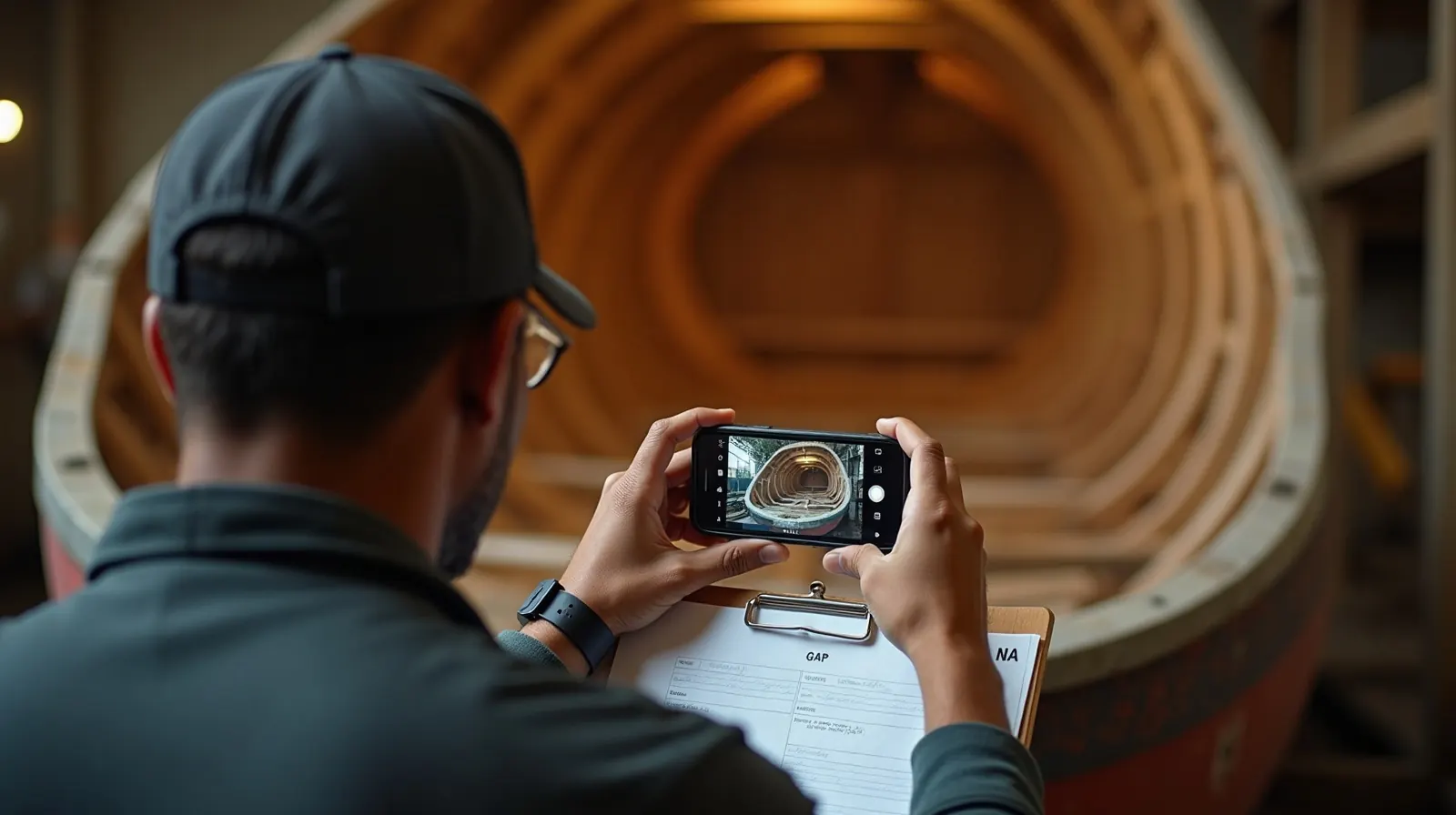
In short: Demand a photographic build diary as a contract deliverable, not a courtesy. A disciplined record — dated, geotagged photos of every structural element before it is closed in, keyed to a simple log of who did what with which materials — costs the yard a few minutes a day and gives the owner the single most valuable document the build produces: proof of what is inside the boat.
Every finished vessel is a sealed box. Once ceilings, soles and linings go in, the owner can no longer see the frame heels, the tank tops, the cable runs or the laminate behind the gelcoat — and for the next thirty years, every survey, sale, insurance claim and warranty dispute will turn on what is believed to be in there. Belief is a poor foundation. A digital build diary replaces it with evidence. Here is what owners should demand, how the good yards deliver it, and why it changes outcomes years after handover.
What a proper build diary contains
The core is photographic: every structural element captured before it is enclosed. Keel scarfs and floor fastenings before ceiling planking; frame-to-plank fastening patterns; tank exteriors, welds and fittings before tank spaces close; every cable and pipe run before linings; laminate lay-ups in progress, not just finished surfaces. Photos carry dates and, on well-run projects, location metadata as standard.
Around the images sits a spare, factual log: date, work performed, crew or subcontractor responsible, materials used with batch or grade references — the timber grading slip, the resin batch number, the welding consumable spec. Ten minutes of discipline a day. On our supervised builds the diary also records each hold-point inspection and stage-gate approval, so the photographic record and the contractual record move together, and every entity in the subcontractor web appears against its own work.
Why it changes outcomes: five moments the diary decides
Mid-build disputes. When memory diverges on what was agreed or installed, the dated record ends the conversation in minutes.
Warranty claims. Two years after delivery, proving a defect originates in workmanship rather than maintenance is the whole game — as our guide to claims against a yard explains, the owner with installation photographs negotiates from a different planet than the owner without.
Insurance. After fire or loss, the insurer’s surveyor reconstructs value from evidence; the diary is that evidence, a point we develop in our article on construction insurance.
Resale. A buyer’s surveyor who can see inside the closed box — fastening patterns, tank welds, cable routing — writes a different report, and the price follows the report. Vessels from our network sell with their diaries as part of the handover file.
Refit and repair. Ten years on, the refit yard that knows exactly where every run and structural member sits quotes tighter and cuts fewer exploratory holes. The same logic powers the takeover audits described in our unfinished-hull guide — a stalled project with a diary is auditable in days; one without is archaeology, and our build completion team prices the difference into every takeover.
Getting it into the contract
Write the diary in as a deliverable with teeth: scope (elements to be photographed before closure — list them), frequency (weekly upload minimum; daily during structural phases), format (shared cloud folder with owner access throughout, full archive at handover), and consequence (closure of a listed element without its record is a non-conformity reopened at yard cost). Indonesian yards increasingly accept this readily — smartphone cameras and WhatsApp made the habit natural, and the better production lines already run internal versions, as we saw inside the speedboat lines. Where a yard resists visual accountability, treat that as data about the yard.
The owner’s side of the discipline
A diary nobody reads protects nobody. Review uploads weekly; query gaps immediately — a fortnight of silence during framing is a signal, not an oversight. If you cannot review it yourself, your owner’s representative does it as core scope, and our remote supervision clients receive a monthly diary digest with exceptions flagged. Archive everything at handover in triplicate: aboard, ashore with the owner, and with the project manager. Storage costs nothing; the absence of one photograph, years later, can cost the price of a survey haul-out — or a claim. The full supervision framework this belongs to is on our process page.
Start your build with its record
If you are contracting a new build anywhere in Indonesia, put the diary clause in before signature — and if your current build has no record yet, start it this week; partial evidence beats none. Request a free consultation, message us on WhatsApp at +62 811 3941 4563, or email [email protected], and we will send our diary specification and fold it into your project’s supervision plan.
Frequently Asked Questions
What does a photographic build diary cost?
Effectively nothing in cash: smartphone photography, a shared cloud folder and minutes per day of yard time. Priced as supervision effort, it is a rounding error against the four to seven percent typical of full owner’s representation — and it is the deliverable that keeps paying after handover.
How many photographs should a complete build produce?
A documented 30-to-50-metre build typically archives two to six thousand images plus key videos — pressure tests, engine first starts, trials. Volume matters less than coverage: every listed element photographed before closure, every photo dated and attributable.
Can the diary be faked or backfilled?
Metadata makes wholesale fabrication hard and spot-checkable — timestamps, device data and location fields must reconcile with the schedule and payment record. An owner’s representative who cross-checks uploads against site visits closes the loop entirely.
Who owns the photographs?
Write it down: contract wording should grant the owner an unrestricted archive at handover and rights to use the record for survey, sale, insurance and legal purposes. Yards may keep their own copies for portfolio use with the owner’s consent — a fair trade most parties accept without friction.

Written by
